Seedream 5.5 is the cheaper option at $0.02-$0.028 per image, but Nano Banana Pro takes natural portraits and 4K print jobs. Bulk renders go to Seedream; hero portraits and 4K posters go to Pro.
| Job | Pick | Why |
|---|---|---|
| 1,000 product renders at 2K | Seedream 5.5 | $28 vs $134 at Google's Pro base rate |
| Stickers, cutouts, layers | Seedream 5.5 | Native transparent PNG in one pass |
| Menus, labels, infographics | Seedream 5.5 | Adds less unrequested text in the cited duel |
| Natural hero portrait | Nano Banana Pro | Most natural face in the cited 6-prompt duel |
| 4K poster or print | Nano Banana Pro | Of these two, only Pro offers 4K |
| 10+ reference blend | Nano Banana Pro | Up to 14 images, 5 consistent people |
What 1,000 images cost at 1K, 2K and 4K — plus speed
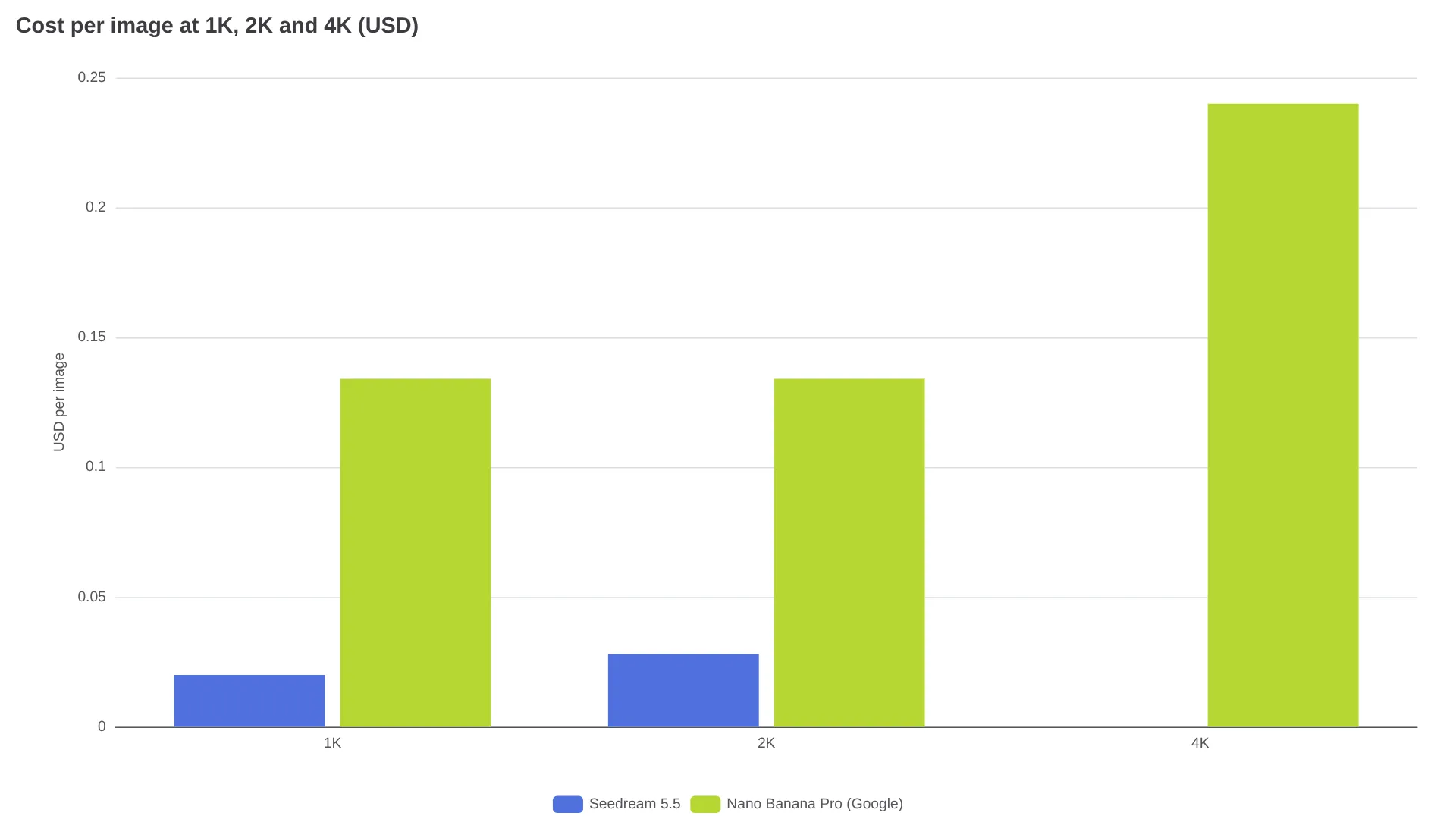
Seedream prices are third-party API rates, while Google separately bills text and reference inputs, so $0.03 aggregator Pro rates are not directly comparable.
| Model | 1K price | 2K price | 4K price | Provider / pricing basis |
|---|---|---|---|---|
| Seedream 5.5 | $0.02 | $0.028 | not offered (max 2K) | Third-party API rates (blog.siray.ai; quantslant.com) |
| Nano Banana Pro | $0.134 | $0.134 | $0.24 | Google base rate, Gemini API (aistudio.google.com) |
Batch math at these bases:
- 1,000 Seedream 5.5 images at 2K: 1,000 x $0.028 = $28.
- 1,000 Nano Banana Pro images at 2K via Google: 1,000 x $0.134 = $134.
- 1,000 Nano Banana Pro images at 4K via Google: 1,000 x $0.24 = $240.
Seedream ran 19-40 seconds including queue; Pro was usually 36-40 seconds but had longer outliers, so use a wider Pro timeout (blog.siray.ai; pixeldojo.ai). Resolution decides before price: Seedream tops out at 2K (~4 MP).
Transparent PNGs and product assets in one pass
Seedream produced a real alpha channel in the cited test; the comparison did not document an equivalent Pro workflow (pixeldojo.ai).
The recipe is two fields together: "output_format": "png" plus "background": "transparent". PNG alone returns a white background; adding the flag returns PNG with an alpha channel (blog.siray.ai). In those Seedream API tests, solid objects, hair and mesh bags cut out cleanly with a soft contact shadow usable in layouts (blog.siray.ai; quantslant.com).
Glass and water did not show the background through, while smoke rendered semi-transparent correctly (quantslant.com).
Small text, posters and infographics: who stays literal
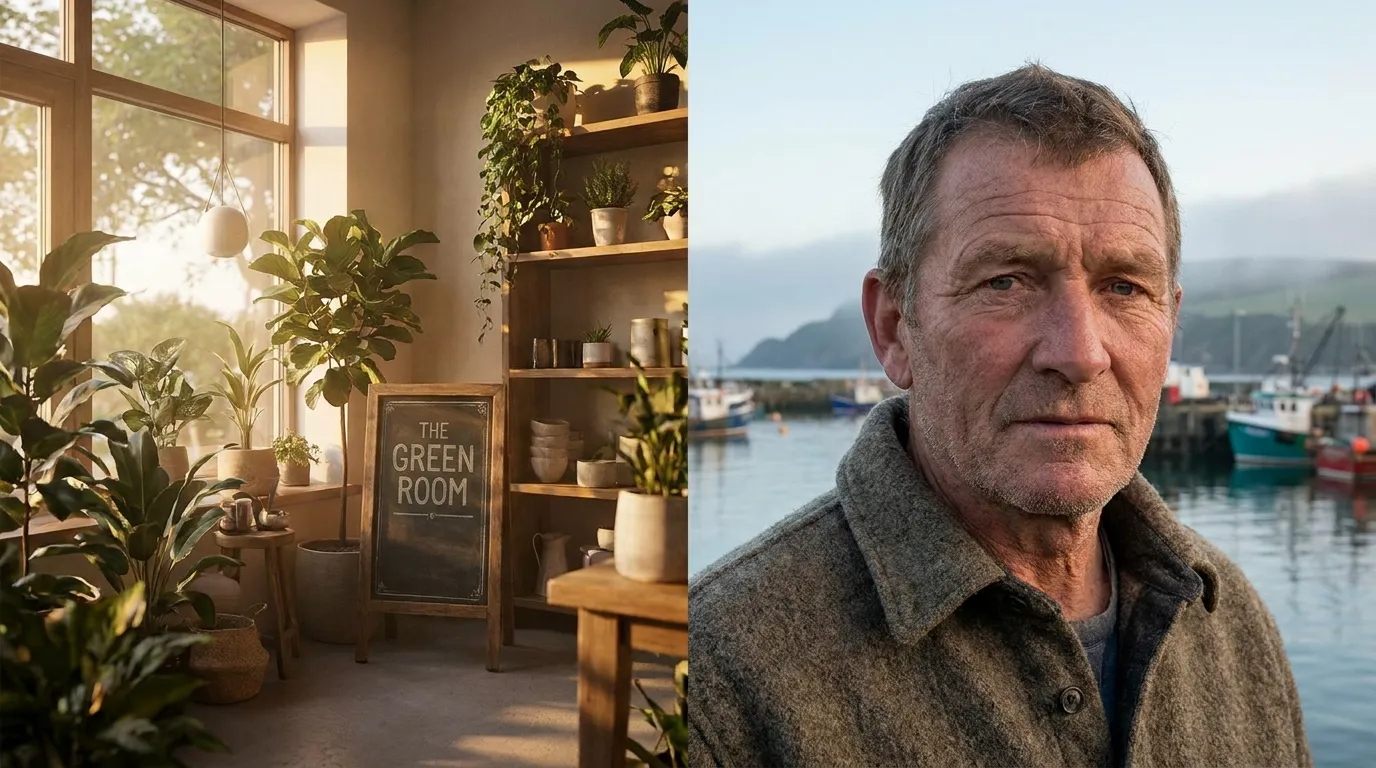
Both models spelled short headlines correctly in the reported tests. In one reported test, an eight-line chalkboard menu reproduced all drink names, prices and footer exactly on Seedream 5.5 (blog.siray.ai). In a six-prompt duel at 2K (one run per prompt, not a blind benchmark), both spelled a plant-shop sign set, a serum label reading "DEW NO. 5" and a concert poster correctly; Seedream held a pour-over infographic to the four requested steps while Pro added "20 G" and "94 C" onto icons despite a no-extra-text instruction (pixeldojo.ai). Dense newspaper layouts still fail on either model (quantslant.com).
Put exact strings in quotes in prompt order and name what must stay unchanged first.
Portraits: polished vs natural — and what Gemini users report now
Pro took the most natural face in the six-prompt duel while Seedream rendered a polished magazine look (pixeldojo.ai). Seedream preserved pores, freckles, and backlit strands but looked more editorial than candid (blog.siray.ai; quantslant.com).
Two Reddit threads report Pro access and consistency problems, including a missing Pro path after Nano Banana 2 appeared as the default:
I came here because I had the same problem. I'm a pro user, and I no longer see the redo with NBP option. — u/SessionFree on r/GeminiAI
The second thread reports ignored reference shots and shifting likeness (comic-workflow thread). Pin the model and interface before a long character run.
What editing stamina is proven, not promised
ByteDance claims up to 100 consecutive edits (seed.bytedance.com). Cited tests showed reliable results across only 3 portrait edits and 8 product edits, with one ignored "smile" request (blog.siray.ai; quantslant.com).
Reference capacity favors Pro: up to 14 blended inputs and 5 consistent people (blog.google). Seedream's editing endpoint accepts 1-10 images per request (blog.siray.ai; pixeldojo.ai).
Using both models through an API
AIReiter offers both as API products: Seedream 5.5 API (1K/1.5K/2K, transparent flag) and Nano Banana Pro API (1K/2K/4K).
Example Seedream transparent-asset call, using the async submit-then-poll pattern in the cited third-party test (blog.siray.ai):
{
  "model": "seedream-5-5-t2i",
  "prompt": "matte stoneware pour-over coffee set, three-quarter view, soft studio light, centered, no text",
  "size": "2368x1776",
  "output_format": "png",
  "background": "transparent"
}
Benchmark both at 2K, then promote only failures in print detail, likeness, or reference consistency to Pro 4K. Pro images carry SynthID and tier-dependent watermarking (blog.google).
Related reading: Seedream 5.5 API pricing and tested prompts and GPT Image 2.6 vs Nano Banana Pro.