 AIREITER
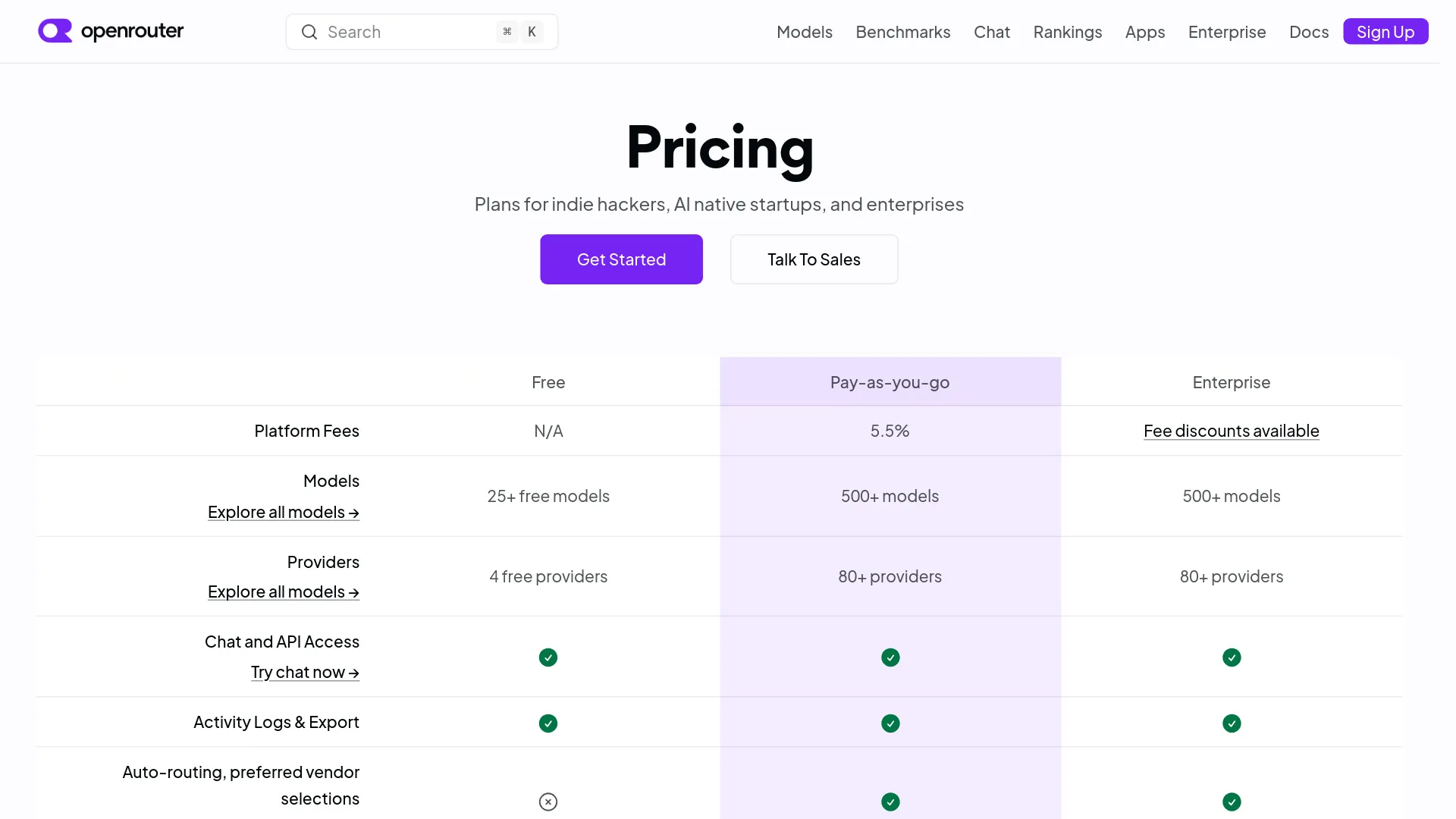
OpenRouter free credits are not a wallet of free dollars. They are a way to use zero-priced model routes within a request quota: 50 free-model requests per day without the qualifying purchase, or 1,000 after at least $10 in purchased credits; both tiers remain capped at 20 requests per minute. As of August 31, 2026, that $10 purchase increases the daily allowance, not endpoint reliability or privacy.
OpenRouter free credits and free-model limits, in one ledger
OpenRouter’s FAQ, pricing page, and rate-limit guidance describe free access as a request quota, not a pool of free dollars.
| Account condition | Free-model requests per day | Free-model requests per minute | What it means |
|---|---|---|---|
| Less than $10 in purchased credits | 50 | 20 | Basic testing tier |
| At least $10 in purchased credits | 1,000 | 20 | Higher daily allowance; same burst ceiling |
| Any tier using a busy provider | May be lower in practice | May be throttled separately | Provider capacity can still return errors |
The daily allowance is shared across free-model usage. Changing models does not create a new allowance, and OpenRouter’s cost guide says extra keys or accounts do not raise the platform limit. These quotas are not guarantees of successful responses, provider capacity, or catalog permanence.
What the $10 purchase changes—and what it does not
The $10 is a normal credit purchase, not $10 of free inference. It raises the daily free-model ceiling from 50 to 1,000, but it does not raise the 20-RPM cap, remove provider throttling, stabilize a rotating model, or add a production SLA.
Standard credit purchases are one-time, not subscriptions. Optional Auto Recharge can create repeat charges when the balance falls below your chosen threshold; the official billing help article explains how to disable it.
Does spending the credits remove the higher limit?
OpenRouter’s limits documentation ties the higher tier to total credits purchased, rather than the amount still sitting in the account. The published rules can change, so check the account’s current status when this distinction matters.
A qualifying purchase does not make a negative balance harmless. OpenRouter’s limits documentation says a negative account balance can prevent requests, including requests to free models, and recommends adding credits until the balance is above zero.
Why a free request can stop before the daily number
A free request can fail because of the shared daily allowance, the 20-request-per-minute limit, or the capacity of the upstream provider. A 429 response is therefore a diagnosis problem, not proof that the daily quota is empty.
| Symptom | Likely control | What to check next |
|---|---|---|
| 429 after sustained free-model use | Daily account quota | Whether the account has used 50 or 1,000 free requests |
| 429 after a burst | 20 requests per minute | Request timing and Retry-After, if returned |
| Error on the first request to a popular model | Provider capacity or endpoint availability | Model page, provider status, and another eligible route |
| Fewer successful replies than attempts | Failed attempts may still consume quota | Activity records and the error body |
OpenRouter’s cost guide warns that failed free-tier requests still count against the daily allowance, even though a failed request is not necessarily billed as paid inference. An overloaded provider can consume quota without delivering a usable response.
Switching models can help with provider availability, but it is not a quota reset. OpenRouter documents a per-day limit, but the pages reviewed here do not promise one universal reset timestamp for every account.
Free pricing is not guaranteed capacity
A model ending in :free is a named free variant. openrouter/free filters currently available free models for request requirements such as image input, tool calling, and structured outputs, then selects an eligible model at random.
Use provider/model:free when repeatable model identity matters. Use openrouter/free when adapting to the current free pool matters more than repeatability. OpenRouter’s router documentation says the response includes the selected model, so record that field when comparing outputs or investigating failures.
Do not use openrouter/auto:free as a free-only safeguard. OpenRouter’s billing help explains that :free is a per-model variant, while the Auto Router can select paid models. The free-only automatic route is openrouter/free.
Three current free models worth checking
The free catalog changes. This short capability-based snapshot was checked on August 31, 2026, using OpenRouter’s free-model collection and individual model pages.
| Model | Check it first for | Published detail | Important caveat |
|---|---|---|---|
| MiniMax M3 (free) | Long-context reasoning, multimodal input, and agents | 1,048,576-token context; text, image, and video input; tool calling (model page) | Free availability and provider capacity can change |
| Poolside Laguna S 2.1 (free) | Coding agents and terminal workflows | 262,144-token context, 32,768 maximum completion, and tool support (model page) | The model page says free-use inputs and outputs may be used to train the models |
| Cohere North Mini Code (free) | Agentic coding with a small active footprint | 256K context, 64K maximum output, tool calling, Apache 2.0 license (model page) | One provider is shown on the model page, so check current endpoint availability |
For current availability, query the Models API or inspect the live catalog. Check the exact free endpoint, supported parameters, provider policy, and current status instead of copying a static list.
The privacy rule behind OpenRouter free credits
:free means zero-priced model inference, not zero retention, no training, or private processing. OpenRouter’s handling and the upstream provider’s handling are separate layers.
OpenRouter’s side versus the provider’s side
OpenRouter says prompts and completions are not stored by OpenRouter by default. It does store request metadata such as timestamps, model identifiers, token counts, and latency. Its data-collection documentation also says a small sample of prompts may be categorized anonymously for reporting and model rankings when the user has not opted into OpenRouter’s broader input/output use.
The upstream provider can have different terms. OpenRouter’s current provider directory labels providers by retention and training practices, so a $0 model price cannot answer a privacy question by itself.
A practical privacy check before sending data
Before sending source code, customer records, legal material, or credentials through a free route:
- Open the exact model and provider entry, not only the collection page.
- Check whether the endpoint may train on prompts and whether it retains them.
- Use OpenRouter’s provider-policy controls to exclude providers that train when the setting is available.
- Enforce Zero Data Retention at the account, model-group, guardrail, or request level when your policy requires it. OpenRouter says ZDR routing does not automatically cover third-party plugins or tools.
If no eligible provider matches the required privacy policy, do not relax the policy just to obtain a response.
Use the $10 threshold without a billing surprise
Treat the credit threshold, model route, and billing controls as separate checks. Buying credits can raise the free-model daily allowance, but it does not force every application request to remain free.
Free-model routes that are easy to confuse
| Route | What it does | Free-only guarantee? |
|---|---|---|
provider/model:free | Calls a named model’s free variant | Yes for that named variant, while available |
openrouter/free | Selects an eligible model from the current free pool | Yes, intended for free-model routing |
openrouter/auto | Chooses from a quality-focused set that can include paid models | No |
openrouter/auto:free | Appends :free to the Auto Router identifier | No; it does not turn Auto into a free-only router |
After a request, check the Activity page for the actual model and cost. OpenRouter’s billing help recommends Activity when a request appears to have used the wrong route. For an API key used only for experiments, configure a tight key-level credit limit through the limits API. Do not add a paid fallback unless you have intentionally accepted paid usage.
Credits, expiry, and Auto Recharge
OpenRouter’s credit-expiration help article says it reserves the right to expire unused credits 365 days after purchase. Its billing help says standard purchases are one-time, while Auto Recharge can create repeat charges.
FAQ: OpenRouter free credits and limits
Is OpenRouter free without buying credits?
Yes. OpenRouter provides free-model routes without a qualifying credit purchase, with a documented allowance of 50 free-model requests per day and 20 per minute. The free catalog and provider capacity can change.
Is the 1,000-request limit per model?
No. It is an account-level free-model allowance, not a separate 1,000-request bucket for every :free model. Switching models can change availability, not the account’s daily quota.
Does $10 buy free credits or only unlock a higher quota?
The qualifying purchase is normal OpenRouter credit, not $10 of free inference. Its practical value for this use case is raising the documented free-model daily allowance from 50 to 1,000 while leaving the 20-RPM limit unchanged.
Why did a free request return HTTP 429?
You may have hit the daily account quota, the 20-request-per-minute ceiling, or an upstream provider’s capacity limit. Inspect the error body, response headers, Activity records, and model/provider status before assuming that buying credits will fix the specific failure.
Can I use free models for production?
OpenRouter’s FAQ says free models have low rate limits and are usually not suitable for production. They fit experiments, prototypes, demos, and low-volume personal work better than a customer-facing service that needs predictable capacity.
Does OpenRouter train on free-model prompts?
OpenRouter says it does not store prompts and completions by default, but the upstream provider may retain or train on them. Check the exact endpoint policy and use provider-filtering controls or ZDR routing when the data is sensitive.
The practical choice: more quota or more predictability?
Use the 50-request tier for occasional testing. Consider the $10 qualifying purchase when request count is the bottleneck and you can accept the same 20-RPM ceiling and variable provider capacity. Buy credits for more requests, not as a promise of privacy or uptime.