 AIREITER
ByteDance's Seed team published the Seedance 2.5 launch post on July 31, 2026, opening with "Today, we are officially launching Seedance 2.5." Every route checked a few hours later still showed no publicly selectable 2.5 access. What did go live is less visible and more useful: a model ID and a rate card that price 2.5 roughly 50% above Seedance 2.0.
Where Seedance 2.5 Is Actually Available Today
The table below records what each platform's own page said at the time checked, not what any announcement promised.
| Route | What its own page said | Selectable? | Checked (UTC) |
|---|---|---|---|
| Jimeng (即梦, named as first channel) | Promo banner: "Seedance 2.5 即将震撼首发" (about to debut) plus teased membership and credit discounts | No — video card still labelled S2.0 | Jul 31, 06:33 |
| Doubao Pro | Named in the launch post as a day-one channel | Not checked, no public web entry point | Jul 31, 06:40 |
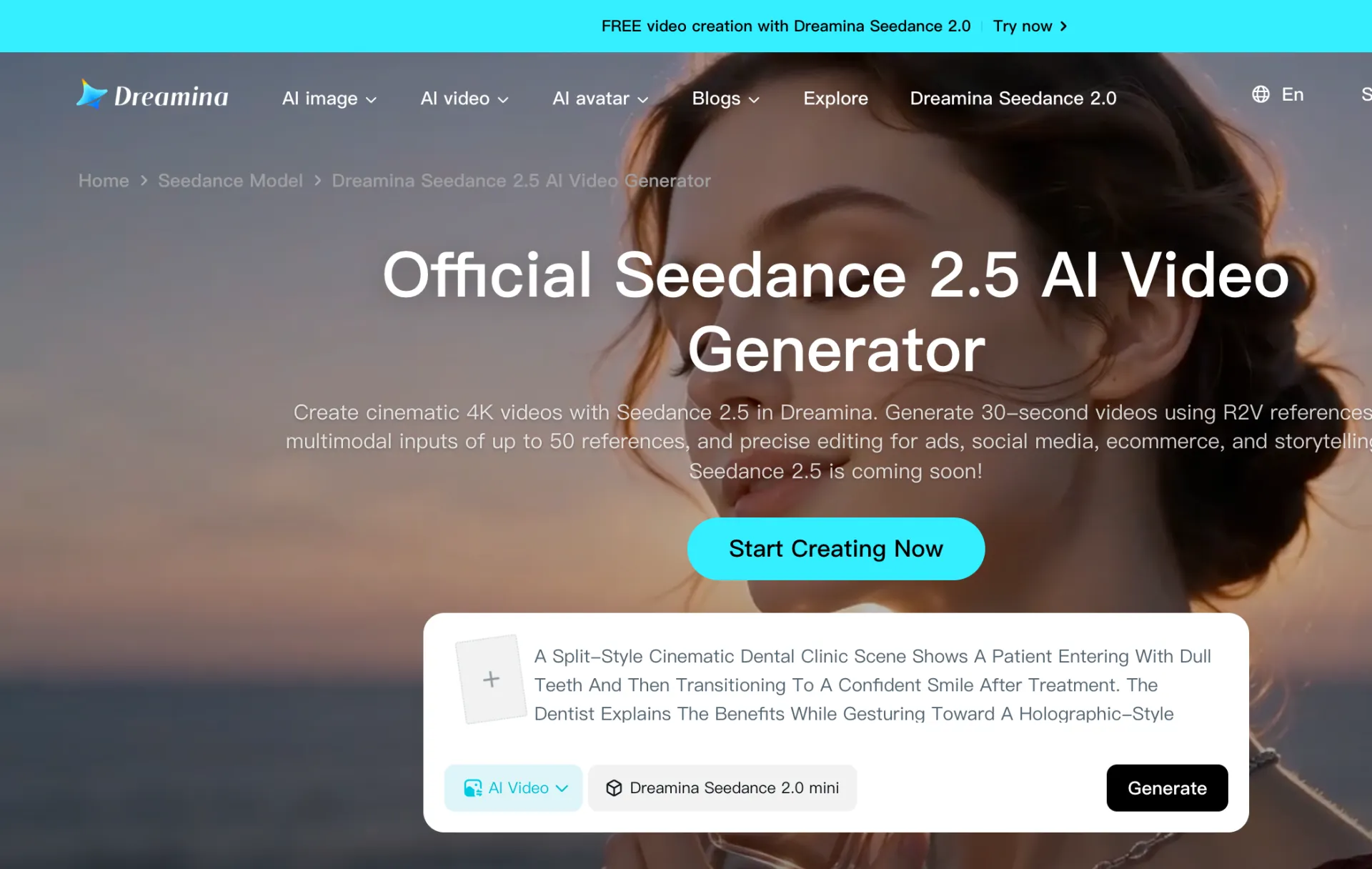
| Dreamina (global) | "Seedance 2.5 is coming soon!" | No — generation box still on Dreamina Seedance 2.0 mini | Jul 31, 06:34 |
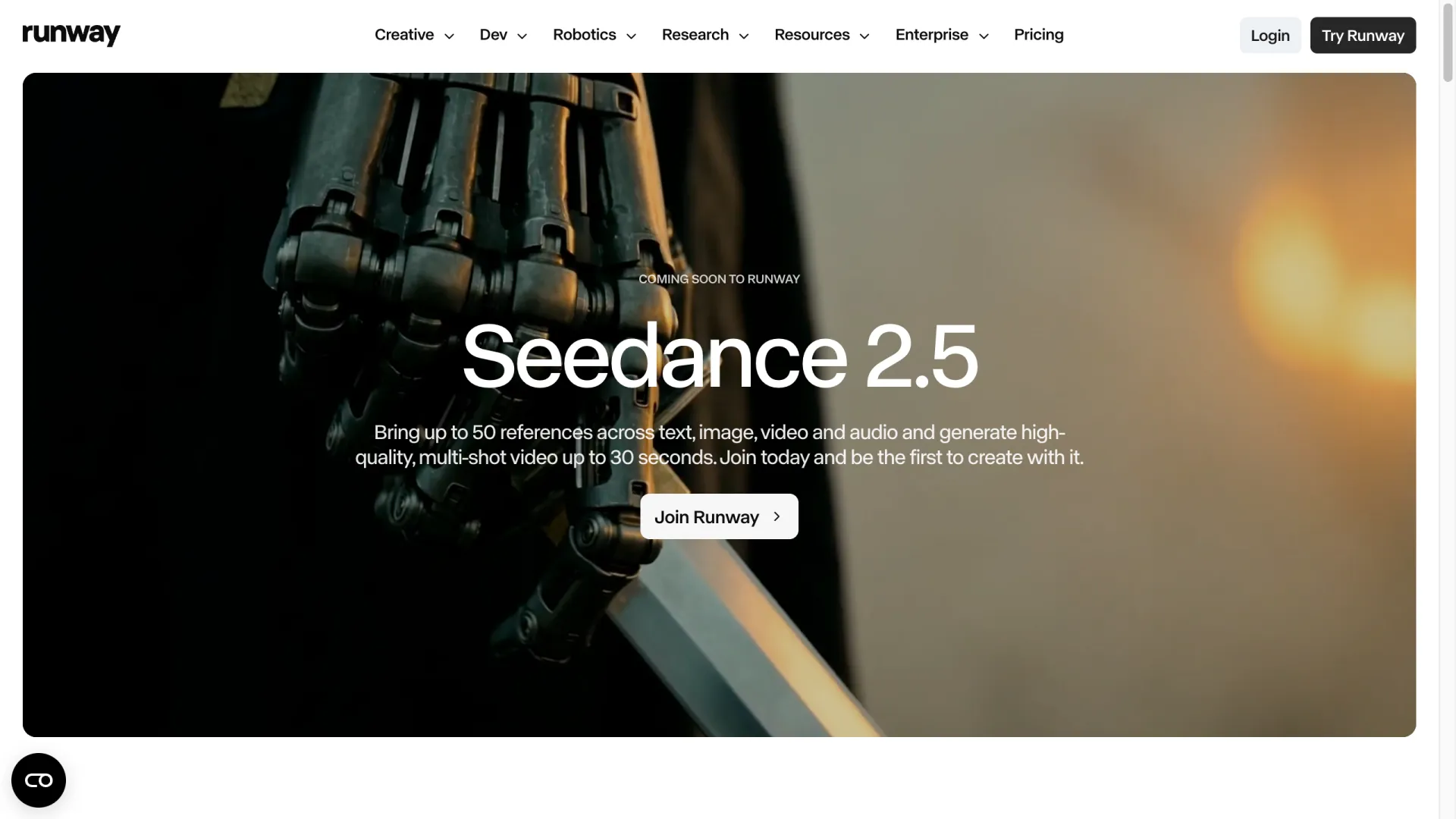
| Runway | Dedicated page headed "Coming soon to Runway" | No — waitlist-style "Join Runway" CTA | Jul 31, 06:36 |
| Pika | Nothing on the public site; only its Jul 29 X post saying "arriving soon" | No, /seedance-2-5 redirects to login | Jul 31, 06:38 |
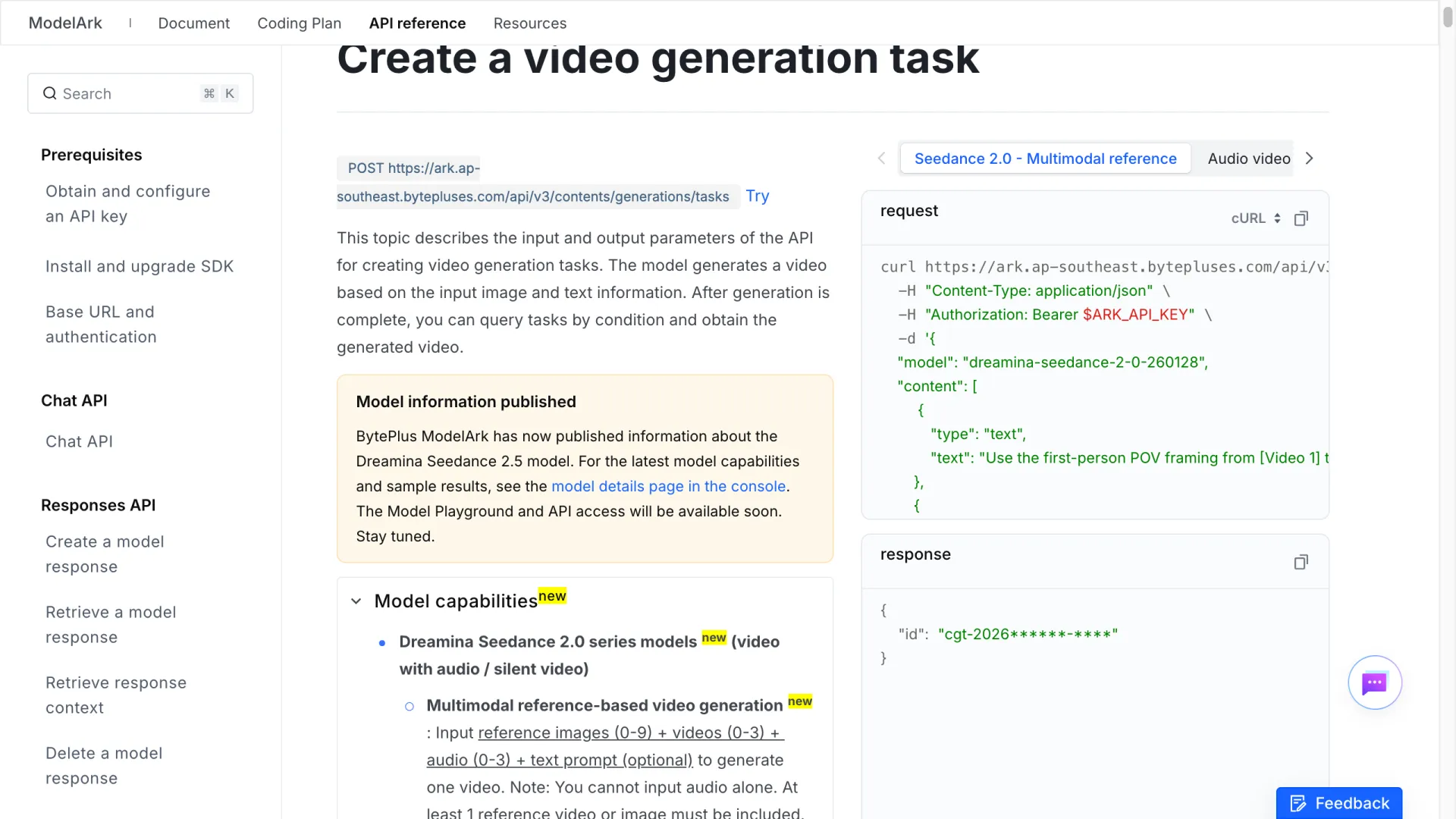
| BytePlus ModelArk (API) | Model information and pricing published; "The Model Playground and API access will be available soon" | No | Jul 31, 06:31 |
Jimeng matters most here, because it is the channel ByteDance named first, and its logged-out homepage was still running a pre-launch banner promising discounts "to be revealed."

Dreamina, the global counterpart, describes 4K, 30-second, 50-reference generation in the present tense, closes with "Seedance 2.5 is coming soon!" and still offers Dreamina Seedance 2.0 mini in the generation box underneath.
Runway commits to specs without claiming availability: up to 50 references, multi-shot video up to 30 seconds, and "up to 30 seconds in 4K." That last claim is Runway's, not ByteDance's.
Watch model pickers rather than announcement posts.
Seedance 2.5 API Pricing on BytePlus ModelArk
The rate card is public even though the endpoint is not. ModelArk's pricing documentation lists the model as dreamina-seedance-2-5-260628 and bills it by token, at 10.70 USD per million tokens for input without video and 6.40 for input with video, for 480p and 720p output.
Translated into ByteDance's own per-video examples (16:9, five-second output), that lands as follows, next to the model it replaces:
| Model | 480p | 720p | 1080p | 4K |
|---|---|---|---|---|
| Seedance 2.5 | $0.514 / clip ($0.103/s) | $1.156 / clip ($0.231/s) | Not listed | Not listed |
| Seedance 2.0 | $0.35 ($0.07/s) | $0.76 ($0.15/s) | $1.87 ($0.37/s) | $3.89 ($0.78/s) |
| Seedance 2.0 Fast | $0.28 ($0.06/s) | $0.60 ($0.12/s) | Not supported | Not supported |
| Seedance 2.0 Mini | $0.18 ($0.04/s) | $0.38 ($0.08/s) | Not supported | Not supported |
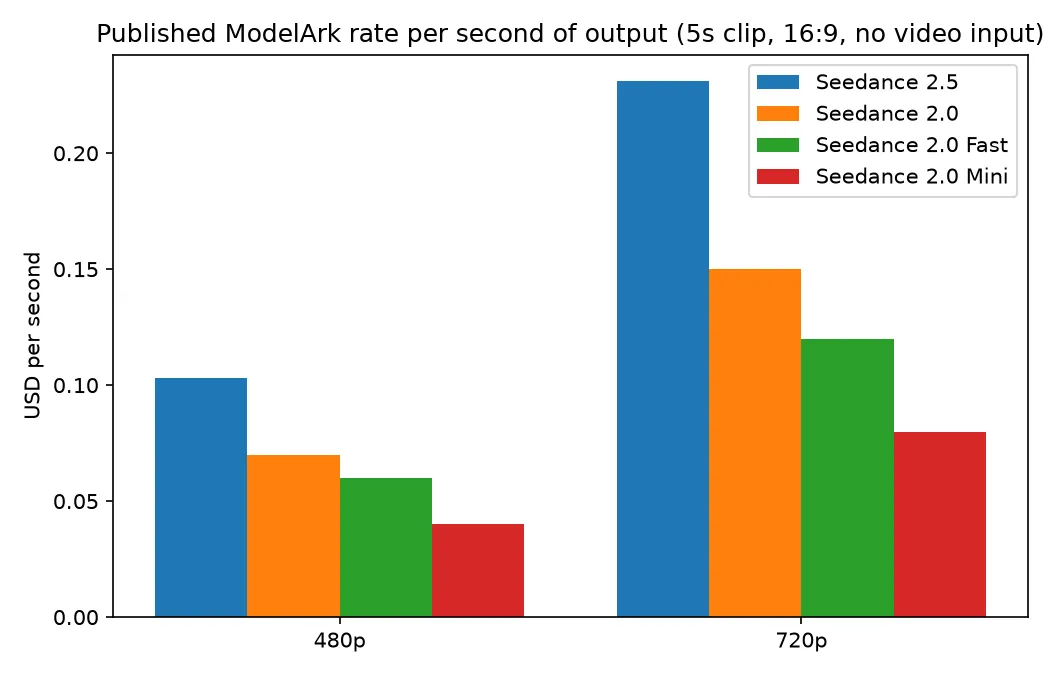
So 2.5 costs about 47% more than 2.0 at 480p and about 54% more at 720p, and roughly triple Seedance 2.0 Mini. Scaling the published per-second figure, a full 30-second clip works out near $3.09 at 480p and $6.93 at 720p. Treat that as arithmetic rather than a quote: ByteDance's examples are all five-second outputs, and token consumption need not scale linearly with duration.
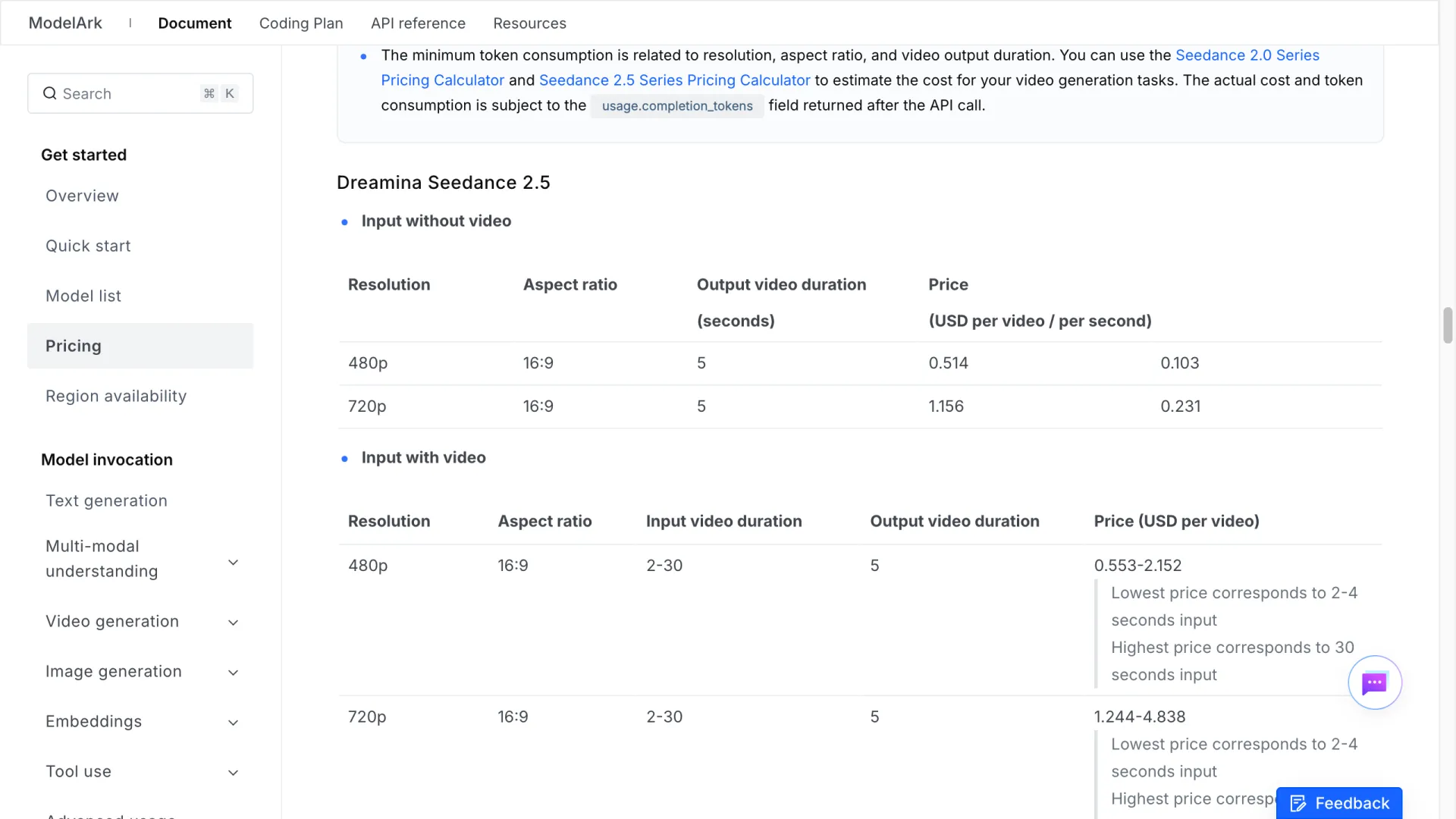
Feeding a video in changes the shape of the bill. For a five-second output, 480p runs $0.553 to $2.152 and 720p runs $1.244 to $4.838, with the top of each range corresponding to a 30-second input clip. ModelArk also applies a minimum token consumption when the input includes video, so short outputs from long inputs cannot be made cheap by trimming the output. The same pricing table caps 2.0's video input at 15 seconds, against 30 for 2.5.
The 4K question is unresolved
ByteDance's launch post names no resolution ceiling, and the rate card stops at 720p — while 2.0's covers 1080p and 4K. Dreamina and Runway both advertise 4K for 2.5. Until a 1080p or 4K row appears in ModelArk's table, the only prices anyone can plan against are the two above, and a 4K tier would sit well above them: on 2.0, moving from 720p to 4K multiplied the per-second rate by 5.2.
The endpoint is not open yet
ModelArk's API reference carries a notice directly above the request example: model information is published, and "The Model Playground and API access will be available soon." Its own cURL sample still calls dreamina-seedance-2-0-260128, so no first-hand latency or cost measurement is possible from this side yet. Integration prep is covered in the Seedance 2.5 API guide; AIReiter's Seedance 2.5 page tracks the same opening.
What ByteDance Confirmed at Launch
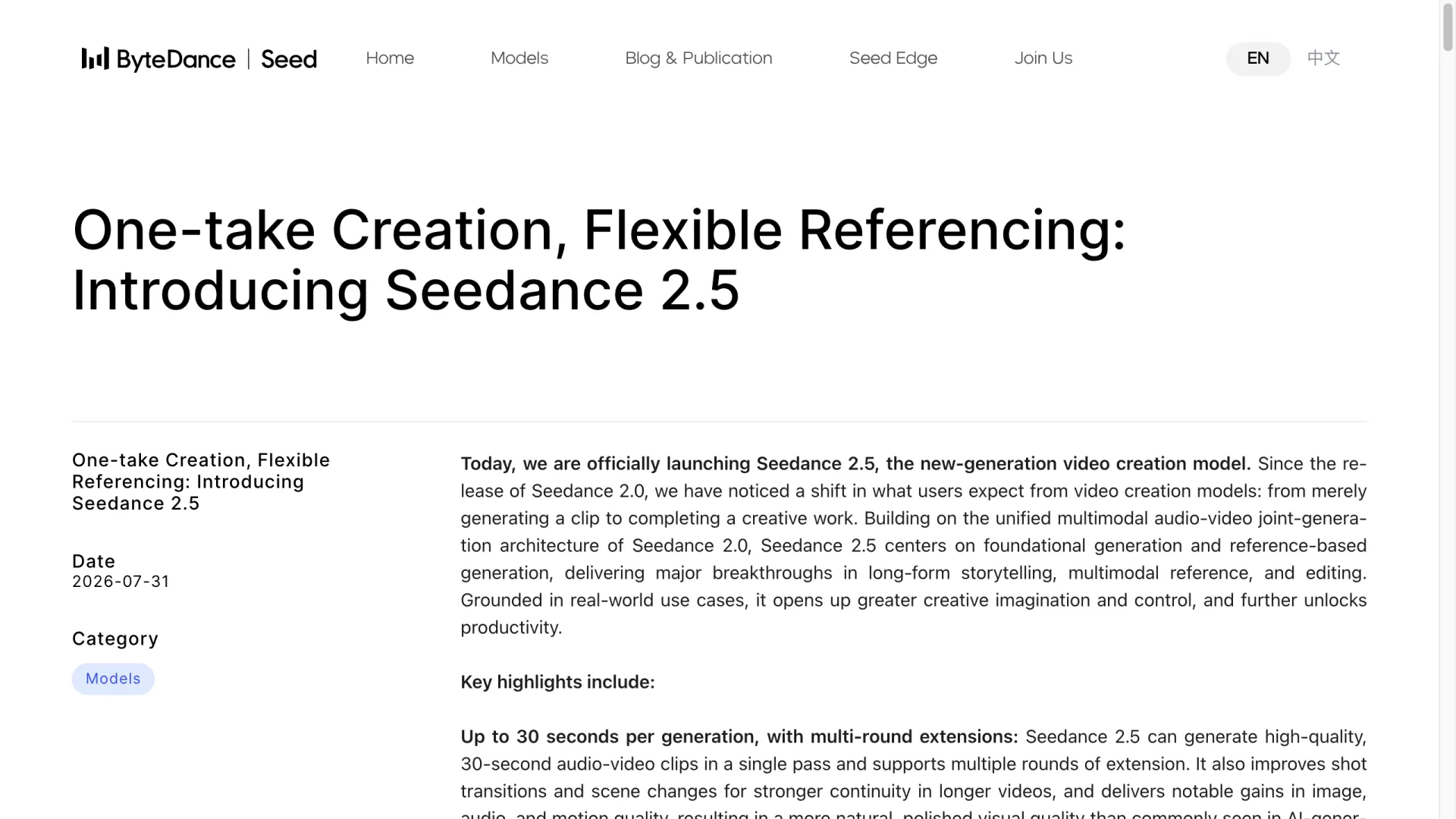
- Channels: rolling out on "Jimeng AI, Doubao Pro, and other platforms," with API access coming later via BytePlus ModelArk. The stated path is Jimeng Web or Doubao Pro → Video Generation → Select Seedance 2.5.
- Duration: single-pass generation goes from 15 seconds on 2.0 to 30 seconds, and the official model page allows extending "twice" — a ceiling near 90 seconds, not the 180-second long-video mode Dreamina's page still advertises.
- References: up to 30 images, 10 video clips, and 10 audio clips per pass. The "up to 50 references" figure in partner marketing is that sum, not 50 images. For scale, ModelArk's 2.0 endpoint accepts 0–9 reference images, 0–3 videos, and 0–3 audio clips.
- Editing: timestamp-level control over audio and video, plus green-screen, camera-perspective, and reference-based editing.
ByteDance also published its own limits, which is the most useful sentence in the post for anyone budgeting revisions:
"We recognize there is still room for improvement, particularly regarding the physical plausibility of complex motions and the stability of scenes involving interactions among multiple subjects." — ByteDance Seed, Jul 31, 2026
Multi-character scenes are also what the 30-image reference ceiling makes newly practical, so budget for iteration there rather than first-pass keepers.
Wait for 2.5, or Ship on Seedance 2.0 Today?
The split is cleaner than usual, because the two models are not competing on quality tiers — they are competing on what is reachable.
Wait for 2.5 if the work needs a single continuous 30-second take, or if it depends on carrying many references at once: 30 images plus 10 videos plus 10 audio clips is a different production model from 2.0's nine images, and stitching is the cost 2.5 removes.
Ship on 2.0 now if clips live in the 4–10 second range, if you need 1080p or 4K with a published price, or if the route has to be an API this week. The same ModelArk documentation prices 2.0 from 480p to 4K and uses it in the live request sample, and 2.0 Mini at $0.04 per second is under half of 2.5's cheapest published rate. A per-second comparison across the family is in the Seedance 2.5 vs Seedance 2.0 breakdown.
Two things stay open, and both affect cost rather than capability: whether a 1080p or 4K tier gets priced for 2.5, and how long the gap runs between the announcement and a selectable model outside China. Neither has a published date.
FAQ
Has Seedance 2.5 been released?
Yes, as of July 31, 2026. ByteDance's Seed team published the launch post that day, naming Jimeng AI and Doubao Pro as first channels. Rollout lags the announcement: every route checked that morning still displayed a coming-soon state.
Can I use Seedance 2.5 right now?
Not through any route checked as of July 31, 2026, 06:40 UTC. The availability table above lists what each platform's own page showed, including ModelArk, where API access was still marked coming soon.
How much does Seedance 2.5 cost?
ModelArk's published examples put a five-second 16:9 clip at $0.514 at 480p and $1.156 at 720p, or $0.103 and $0.231 per second. Video input raises it, up to $4.838 for a five-second 720p output from a 30-second input.
Does Seedance 2.5 have an API?
It has a published model ID (dreamina-seedance-2-5-260628) and rate card on BytePlus ModelArk, but access is marked as coming soon. Nothing is callable yet.
Does Seedance 2.5 support 4K?
Dreamina and Runway advertise 4K. ByteDance's launch post states no resolution ceiling, and ModelArk prices only 480p and 720p output for 2.5, so 4K is unconfirmed at the pricing layer.