 AIREITER
Qwen Image 3 Pro went live on Qwen Cloud on August 5, 2026, with a flat $0.04-per-image API price and a spec sheet that targets structured commercial content: 10-pixel text legibility, 4,500-token prompts, 12-language native rendering. GPT Image 2, shipping since April 2026 via the OpenAI API, costs as little as $0.006 per image at low quality but climbs with resolution and prompt length.
For quick product shots and creative exploration, GPT Image 2 is still faster and cheaper. For text-heavy posters, multilingual assets, and document-like layouts, Qwen Image 3 Pro's flat rate and long-prompt support change the math.
Text Rendering — Where the Gap Is Widest
The Qwen blog demonstrates these specs with a 3×3 infographic grid generated from a single 3,700-token prompt — nine distinct cells with Chinese and English text, LaTeX formulas, and illustrations, all in one pass.
I tested GPT Image 2 with a dense infographic prompt: a "5 Tips for Better Sleep" poster with five numbered tips, specific temperatures ("65–68°F"), and time references ("after 2 PM").
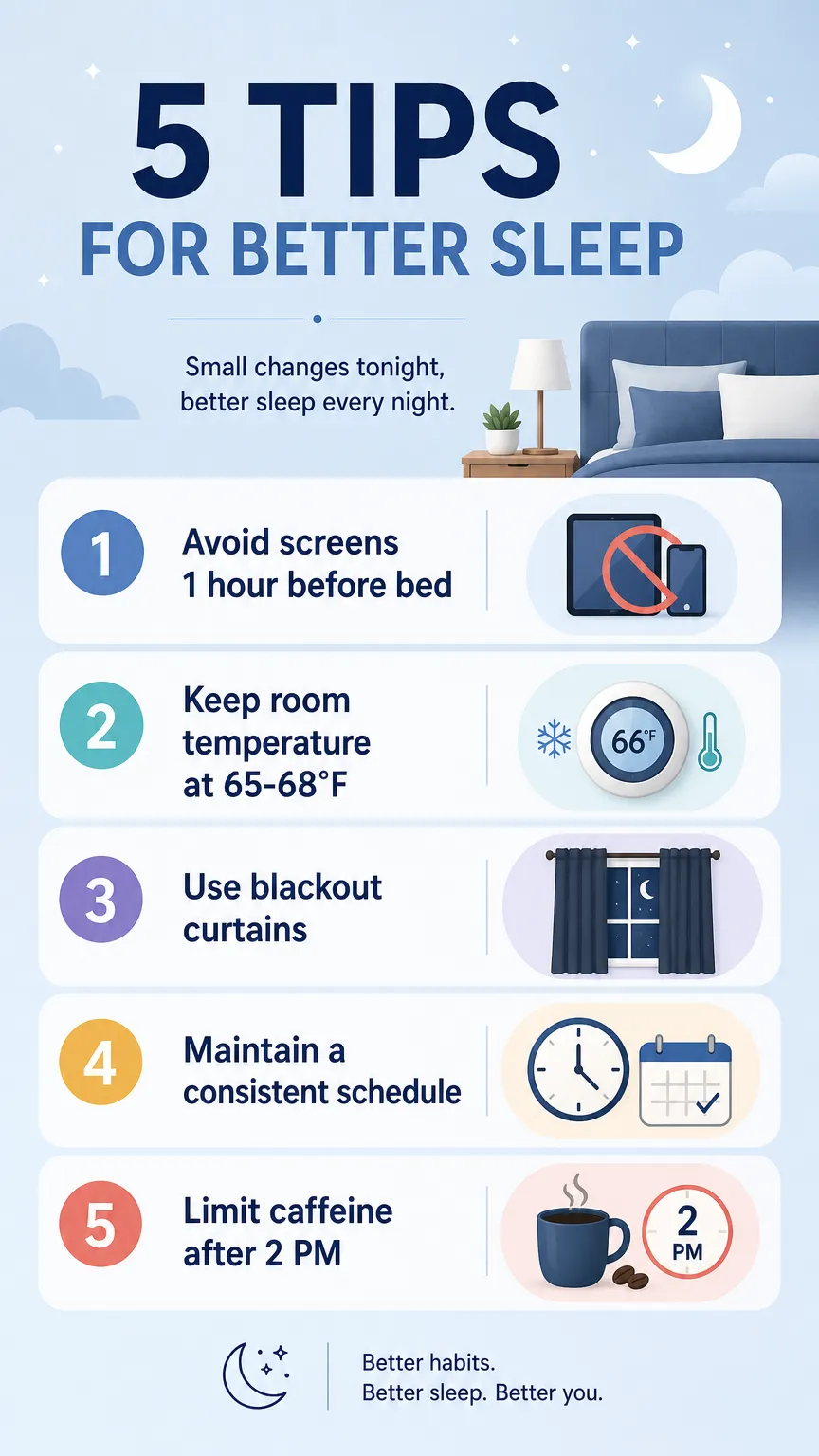
GPT Image 2 rendered the title and most body text correctly, with minor spacing on longer lines. The gap appears with dense, multi-block layouts — exactly where Qwen's 4,500-token prompts and 10px text spec are designed to win.
"Qwen was very similar to ChatGPT, Qwen image, applied it to the berserk panel, keeping the whole panel and the sketch the same." — r/ChatGPT comparison thread (base Qwen Image 3.0 model)
One limitation: Qwen Image 3 Pro's API was unavailable for direct testing during this article's preparation (the kie provider returned 500 errors). The text-rendering claims above rely on Qwen's official demos, not my own side-by-side output. I'll update this section with matched samples once API access stabilizes.
What Each Model Costs Per Image
Qwen Image 3 Pro and Standard
Qwen Cloud lists flat per-image pricing (source: Alibaba Cloud Model Studio):
| Tier | Model ID | Price per image |
|---|---|---|
| Pro | qwen-image-3.0-pro | $0.04 |
| Standard | qwen-image-3.0-standard | $0.03 |
A 4,500-token prompt costs the same $0.04 as a 50-token prompt. No token math.
GPT Image 2
GPT Image 2 uses token-based billing (source: OpenAI API pricing):
| Component | Rate (per 1M tokens) |
|---|---|
| Text input | $5.00 |
| Image input | $8.00 |
| Image output | $30.00 |
Per-image cost depends on quality and resolution. At low quality (1024×1024), roughly $0.006. At high quality (4096×4096), roughly $0.19. Long prompts increase the text-input component.
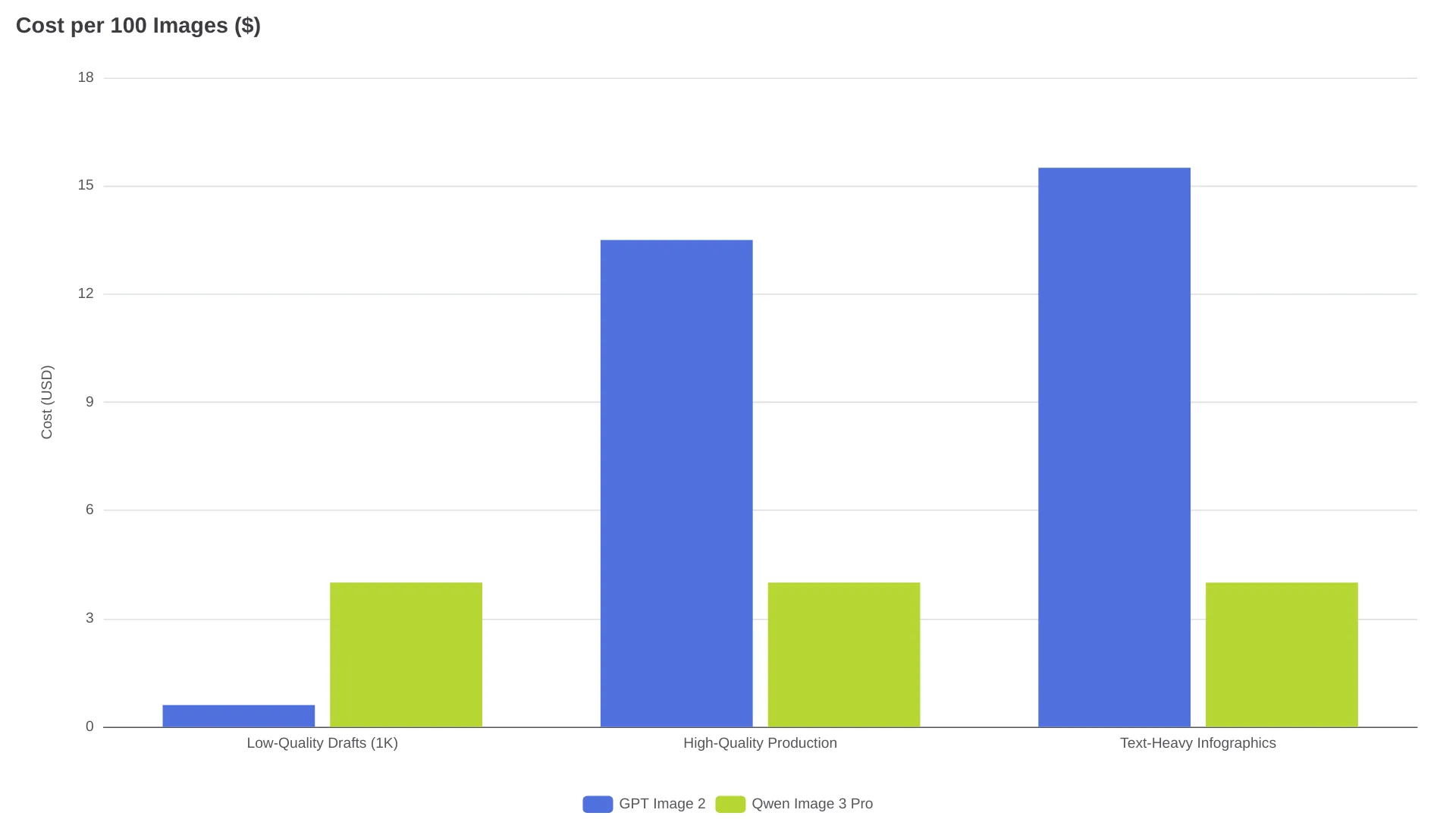
| Scenario (100 images) | GPT Image 2 | Qwen Image 3 Pro |
|---|---|---|
| Low-quality drafts (1K, short prompt) | ~$0.60 | $4.00 |
| High-quality production (4K, medium prompt) | ~$8–$19 | $4.00 |
| Text-heavy infographics (4K, long prompt) | ~$12–$19 | $4.00 |
GPT Image 2 estimates based on OpenAI's token pricing and typical prompt/output sizes. Exact costs vary by prompt length and quality setting.
GPT Image 2 wins on drafts. Qwen Image 3 Pro wins on production work with complex prompts — the flat rate absorbs prompt length that would inflate GPT's token bill.
Product Photo Test
Same prompt to GPT Image 2: ceramic mug, "DESIGN LAB 2026," morning light, steam, bokeh.

Natural scene, correct text, realistic steam. Qwen's official demos show comparable detail with a cleaner commercial feel. For simple product shots, both are production-ready.
Where Qwen Image 3 Pro Pulls Ahead
Long Prompts and Complex Layouts
4,500 tokens (per the official Qwen blog) is enough to describe:
- A full newspaper page with headlines, body text, captions, and photo placeholders
- A 3×3 storyboard with distinct panel descriptions
- An exam paper with mixed formulas, diagrams, and instructions
GPT Image 2 handles moderate layout complexity, but for single-pass generation of multi-section documents, Qwen's longer prompt window is a structural advantage.
Multilingual Text
Qwen Image 3 Pro renders text natively in 12 languages (per the official release): Chinese, Japanese, Korean, Arabic, Spanish, and seven others. GPT Image 2 improved CJK rendering over GPT Image 1.5 but hasn't published a supported-language count or minimum-legible-font-size spec.
If your pipeline serves multiple script systems, Qwen's documented language coverage matters.
Dense Infographics
Qwen's official demos show:
- A whale shark knowledge infographic with species data, measurements, and dense body text — all readable at small sizes
- A full academic paper page with LaTeX: subscripts, superscripts, fraction bars, Greek letters, no garbled symbols
GPT Image 2 handles infographics but leans toward creative interpretation rather than pixel-accurate data displays.
Where GPT Image 2 Wins
Conversational Editing
GPT Image 2 plugs into ChatGPT's multi-turn flow: generate, then "move the logo left," "make the background warmer," "add a shadow." Each edit builds on the last.
Qwen Image 3 Pro offers instruction-based editing with a dedicated Edit model that the Qwen team describes as faster than full regeneration. But there's no conversational memory — multi-step edits require you to write each instruction from scratch.
Creative Range
Watercolor, oil painting, anime, photojournalism, surrealism — GPT Image 2 handles all of them without heavy prompt engineering. Qwen Image 3 Pro's "Deep Knowledge" feature simulates UI interfaces and livestream layouts, but the model is built for structured commercial output.
Speed and Rate Limits
GPT Image 2 returns results in roughly 5–10 seconds in my testing. Qwen Image 3 Pro's Qwen Cloud API currently enforces tighter rate limits — the Qwen Image 3 Pro pricing breakdown on this site documents a ~1 request/minute cap observed during testing. That's a real constraint for batch workflows.
API Comparison
| Detail | Qwen Image 3 Pro | GPT Image 2 |
|---|---|---|
| Model ID | qwen-image-3.0-pro | gpt-image-2 |
| Provider | Alibaba Cloud Model Studio | OpenAI |
| Billing | $0.04/image (flat) | Token-based (~$0.006–$0.19) |
| Rate limit | ~1 req/min (observed) | Standard OpenAI tier limits |
| Max prompt | ~4,500 tokens (official) | Best with concise prompts |
| Max output | Up to 2K | Up to 4K (higher cost tier) |
| Editing | Instruction-based | Conversational + instruction |
| Text languages | 12 native | Multilingual, CJK improved |
For the full Qwen Image 3 Pro API walkthrough — setup, rate limits, and what Pro adds over Standard — see the Qwen Image 3 Pro pricing and limits breakdown.
Which Model to Pick
| Workflow | Pick | Why |
|---|---|---|
| Text-heavy posters, infographics | Qwen Image 3 Pro | 10px text spec, 4,500-token prompts |
| Multilingual marketing assets | Qwen Image 3 Pro | 12-language native rendering |
| Quick product photo drafts | GPT Image 2 | ~$0.006/image, 5–10s generation |
| Creative portrait exploration | GPT Image 2 | Wider style range, multi-turn editing |
| High-volume batch generation | GPT Image 2 | Higher rate limits |
| Complex document layouts | Qwen Image 3 Pro | Single-pass multi-section generation |
| Production API (mature ecosystem) | GPT Image 2 | Four months of battle testing |
Use both if your pipeline produces both types of output.
FAQ
Is Qwen Image 3 Pro free?
Qwen Image 3.0 is free at chat.qwen.ai for browser-based generation. The Pro API tier costs $0.04 per image; the Standard tier costs $0.03 per image through Alibaba Cloud Model Studio.
Can GPT Image 2 render Chinese text?
Yes. GPT Image 2 improved CJK rendering over GPT Image 1.5 and handles Chinese, Japanese, and Korean at headline sizes. For dense small-text CJK, Qwen Image 3 Pro's 10px legibility spec gives it an edge.
Which is better for product photography?
Both produce professional-quality product photos. GPT Image 2 tends warmer and more lifestyle-oriented. Qwen Image 3 Pro leans cleaner and more commercial. For products with printed text (labels, prices, brand names), Qwen is more reliable.
Do both support image editing?
Yes. GPT Image 2 supports conversational editing through ChatGPT and instruction-based editing via API. Qwen Image 3 Pro supports instruction-based editing with a dedicated Edit model.