 AIREITER
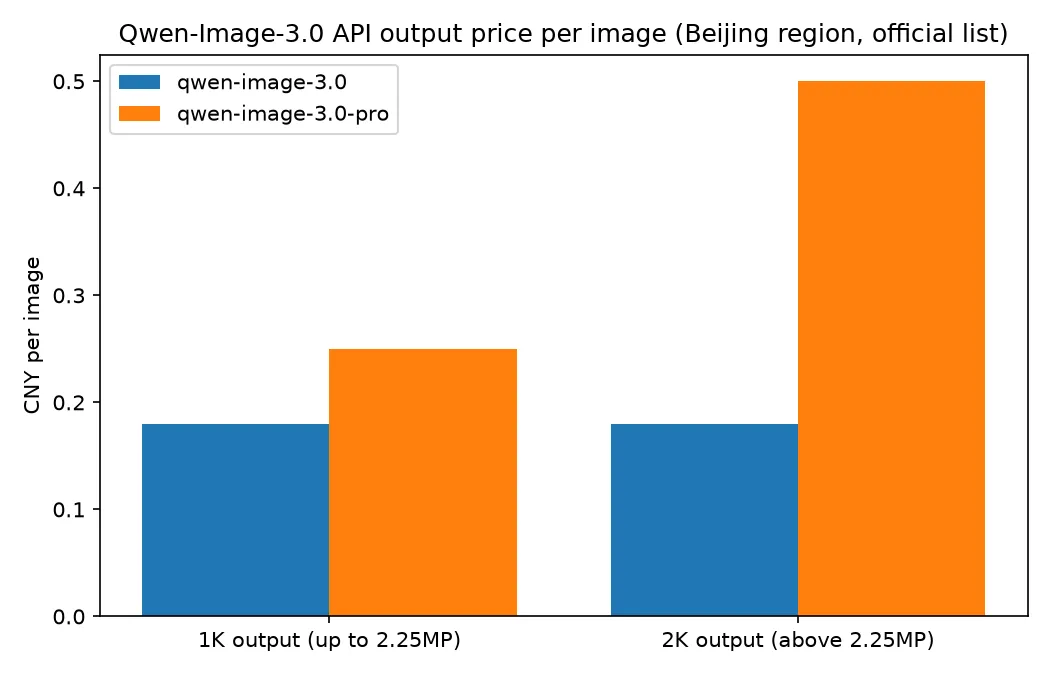
Alibaba has published official API pricing for Qwen Image 3 Pro: ¥0.25 (~$0.035) per 1K-tier image in the Beijing region, doubling to ¥0.5 at 2K, which is 2.8× what the standard qwen-image-3.0 charges for the same resolution. For dense-text layouts the premium is defensible. But one number on the official model page changes every plan you might have for it: the rate limit is 1 request per minute.
What Qwen Image 3 Pro adds over qwen-image-3.0
Qwen Image 3 Pro (qwen-image-3.0-pro) is the higher-quality tier of Alibaba's Qwen-Image-3.0 generation, released July 21, 2026. Both it and the standard qwen-image-3.0 handle text-to-image and image editing through the same API, with identical size limits. The difference is output quality and how you're billed for 2K.
The headline capabilities are shared across the 3.0 family:
- 4.5k-token prompts, up from roughly 1k in the previous generation, enough to specify a full newspaper page, a 3×3 infographic grid, or a nested UI-inside-UI composition in one pass
- 10px text rendering that stays legible, including LaTeX formulas, superscripts, and theorem numbering
- 12 languages and 20+ fonts rendered natively, plus simulated web, game, and livestream interfaces
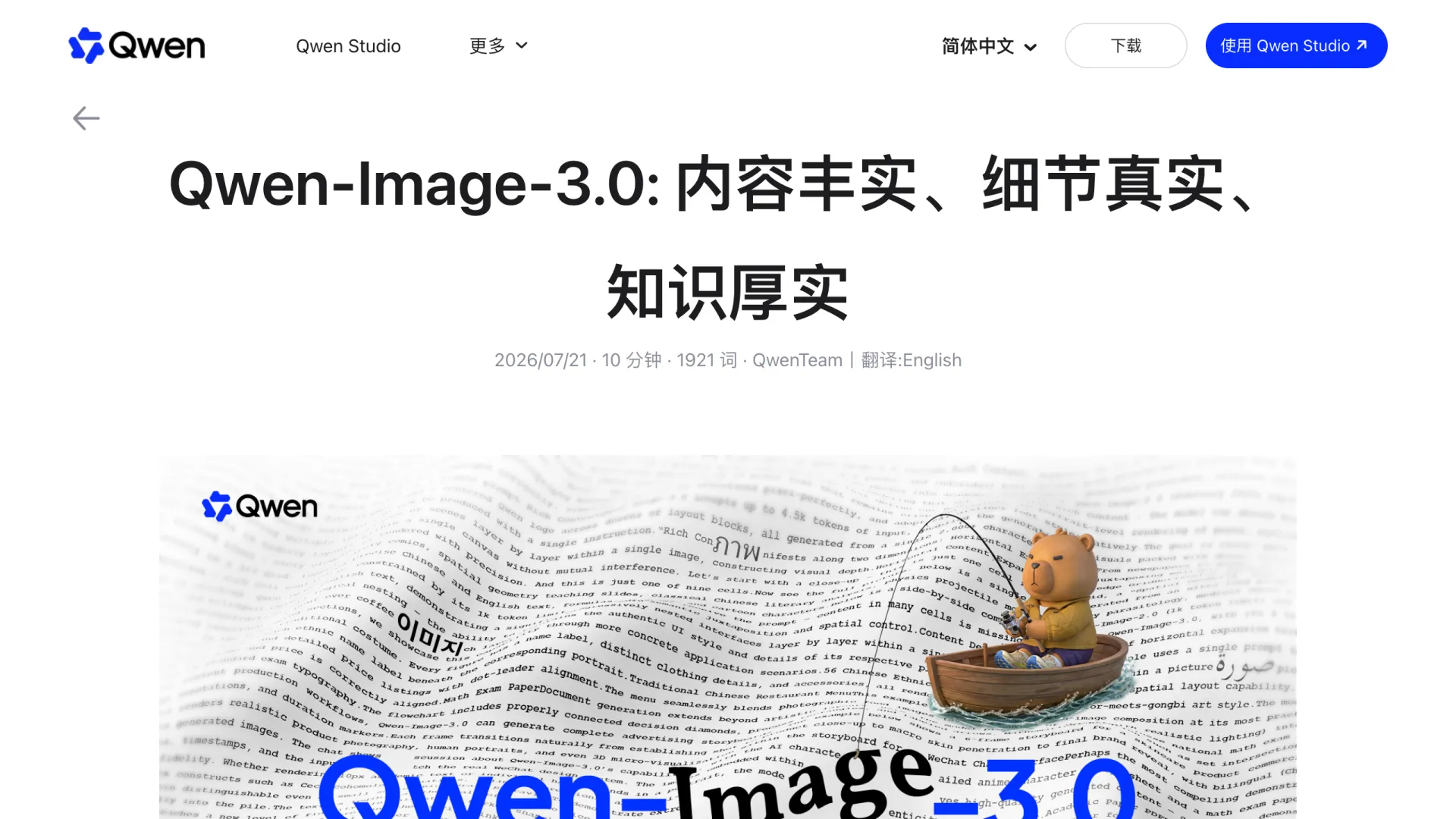
Where they split is positioning. Alibaba's own model selection guidance points complex layout generation, precise small-text rendering, and multilingual font work at Pro; the standard model is described as balancing quality and speed. The spec sheet is otherwise the same for both IDs: output between 512×512 and 2048×2048 total pixels, aspect ratios from 1:8 to 8:1, 1–3 reference images for editing, PNG output.
Official API pricing, verified August 2026
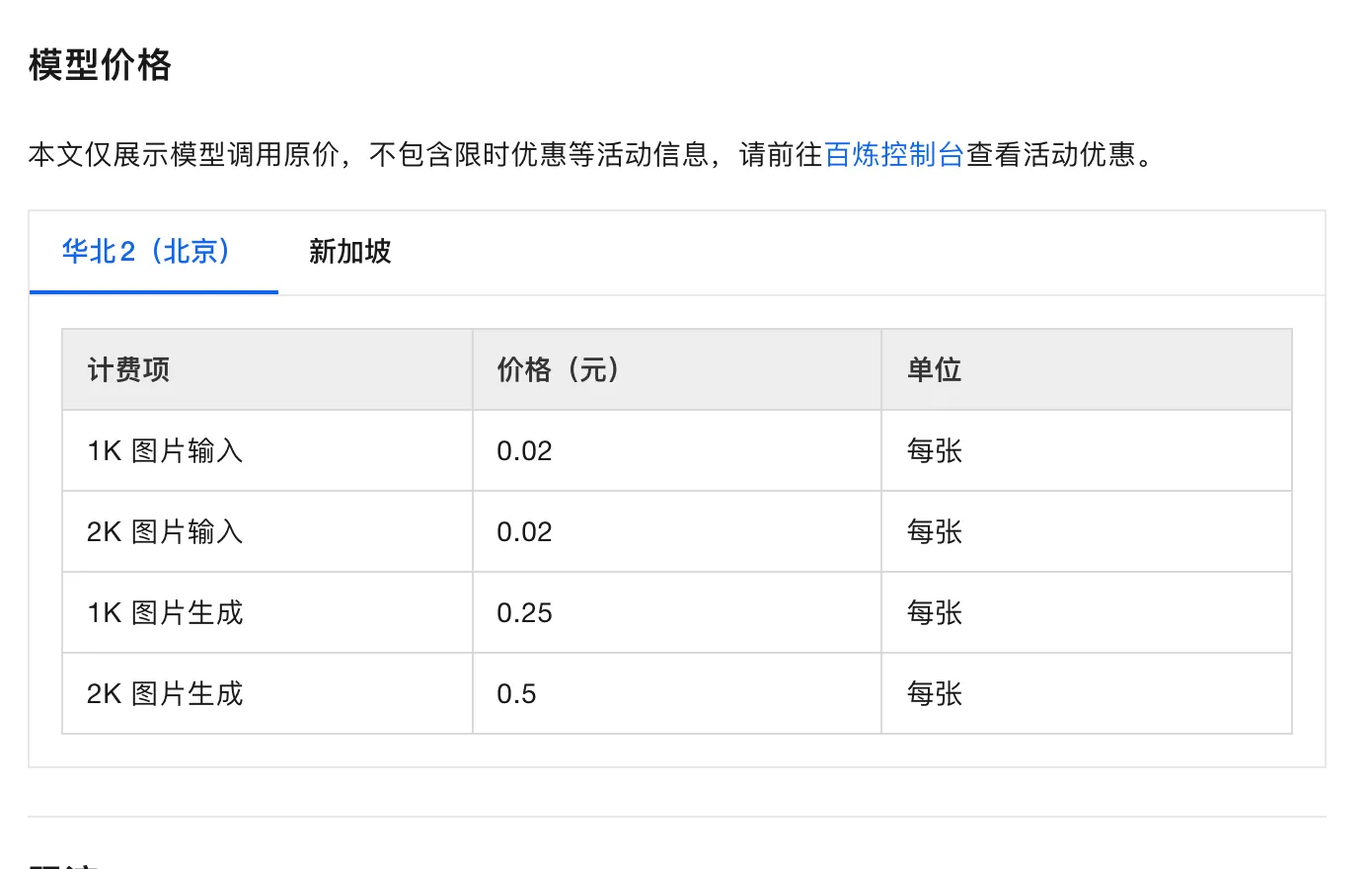
Alibaba Cloud Model Studio lists per-image prices for qwen-image-3.0-pro in two regions, checked against the official price list on August 5, 2026:
| Billing item | Beijing (CNY) | Singapore intl. (CNY) | Approx. USD |
|---|---|---|---|
| Image input (per image) | ¥0.02 | ¥0.022483 | ~$0.003 |
| 1K output (per image) | ¥0.25 | ¥0.299768 | ~$0.035–0.042 |
| 2K output (per image) | ¥0.5 | ¥0.562065 | ~$0.070–0.079 |
The 1K/2K boundary is pixel area: anything up to 2,250,000 pixels bills at the 1K rate, anything above at 2K. The standard qwen-image-3.0 charges a flat ¥0.18 (~$0.025) per output image at either resolution, which produces the odd situation below: at 2K, Pro costs 2.8× the standard model, while at 1K the gap is only 1.4×.
Two footnotes that matter. The Beijing region includes a free quota of 10 images (input and output combined) valid for 90 days after activation: enough to test typography claims on your own prompts, not enough to build anything. And at least one third-party gateway currently lists the model as free, with a model-card note marking it a limited-time, quota-capped trial, so treat any $0 listing as a demo channel rather than a price.
The rate limit that shapes everything: 1 request per minute
The official model page lists RPM (requests per minute) as 1, in both Beijing and Singapore, for Pro and standard alike. That is one to two orders of magnitude below the 60–600 RPM typical of established image APIs.
This single number explains the behavior early adopters reported: instant 429 errors on back-to-back calls, both requests failing when two processes shared a key, and clean runs only when requests were strictly serialized with generous backoff. One test published July 23 measured exactly this pattern through a gateway before the official limit was documented.
Practical consequences:
- Batch generation is off the table. At 1 RPM you get a ceiling of ~1,440 requests/day per key, sequentially, with zero burst tolerance (each request can return up to 6 images via
n, at per-image billing). - Teams sharing a key throttle each other. Two developers iterating on prompts will collide; put generation behind a single-worker queue if you must share.
- A retry loop makes it worse. Back off in 45–60 second steps rather than hammering.
The limit reads like managed-rollout throttling rather than a permanent policy, but until Alibaba raises it, qwen-image-3.0-pro is an interactive tool, not a pipeline component.
Text rendering: where it holds and where it breaks
The typography claim is the reason to care about this model, and it survives independent testing — with one sharp boundary. In published tests of raw Pro output, an espresso-machine spec sheet rendered every value correctly down to a fine-print serial line ("Serial AT-2026-0731 / Made in Suzhou") at roughly 8pt equivalent, and a bilingual sign got both English and Chinese right. Where it failed: a code-editor mockup produced line numbers running 1, 3, 3, 4, 6. Words and labels hold; monotonic sequences and code operators don't.
For calibration, I ran the same spec-sheet prompt shape on Nano Banana Pro (Gemini 3 Pro Image) on August 5, 2026: a fictional AROMA-9 espresso spec sheet with four exact table values and a fine-print serial line, default settings. One attempt, no retries, 65 seconds:
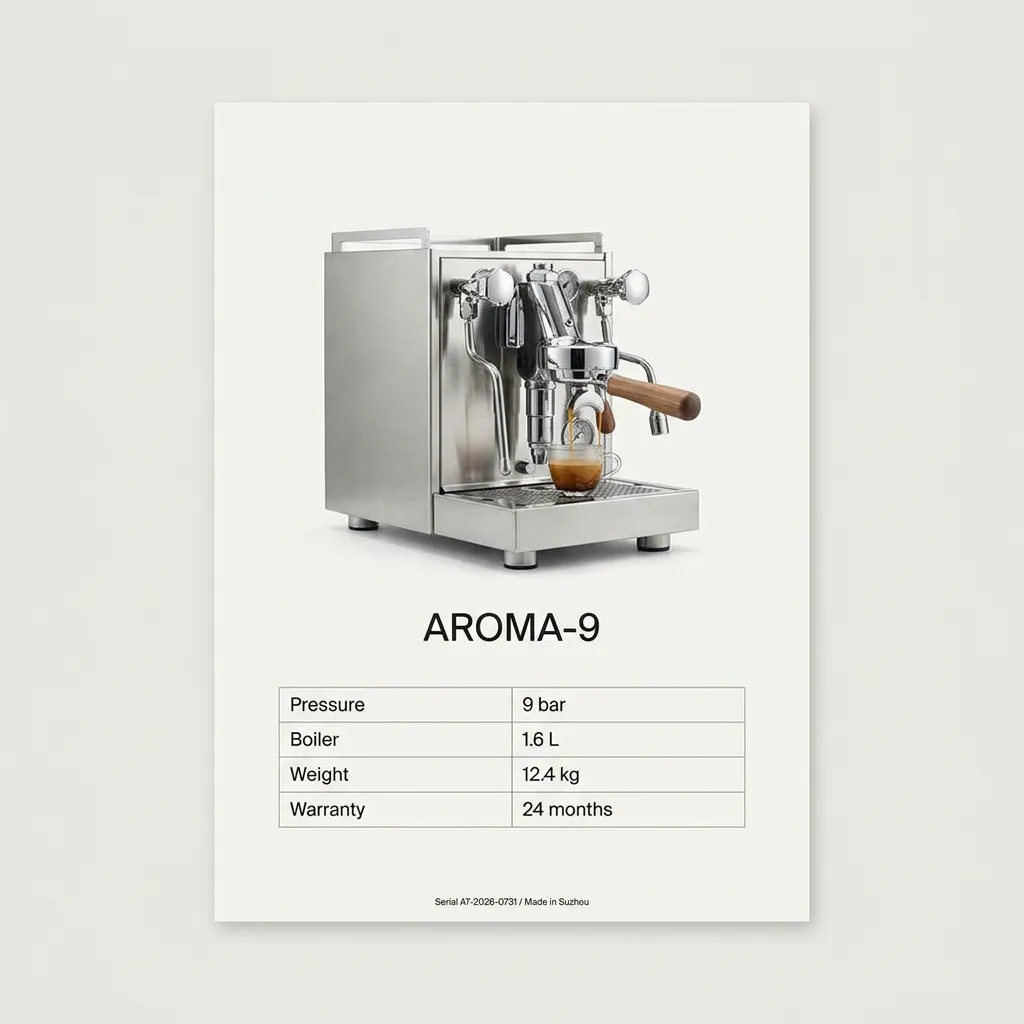
All four spec rows came out correct, but the fine-print line misspelled the city as "Suzheu", which is the exact size regime where Qwen's rendering reportedly held. One image proves little; the pattern it fits is that small-print fidelity is hard and is the specific ground Qwen chose to compete on. Community sentiment splits along the same line:
"Qwen is punching way above its weight class. Gemini 3 Pro has the edge on texture fidelity and 'polish'" — r/QwenImageGen, comparing the previous Qwen image generation against Gemini 3 Pro Image
If your text must be literally correct — code screenshots, numbered axes, sequential data — no current image model is safe, this one included.
How to call qwen-image-3.0-pro
The free path is Qwen Studio (login required): pick image generation and switch the model from the default to 3.0. The API path goes through Alibaba Cloud Model Studio with a DashScope API key. The example below uses the Singapore international endpoint; Beijing requires its own endpoint and a separate API key.
curl -X POST "https://dashscope-intl.aliyuncs.com/api/v1/services/aigc/multimodal-generation/generation" \
  -H "Content-Type: application/json" \
  -H "Authorization: Bearer $DASHSCOPE_API_KEY" \
  -d '{
    "model": "qwen-image-3.0-pro",
    "input": {"messages": [{"role": "user", "content": [
      {"text": "A four-row product spec table, fine print at the bottom..."}
    ]}]},
    "parameters": {"size": "1024*1536", "prompt_extend": true}
  }'
Parameter details that differ from other image APIs, from the official API reference:
| Parameter | Behavior |
|---|---|
size | Free-form width*height; any total pixel area 512² to 2048², aspect 1:8–8:1. Omit it and the model picks a resolution from your prompt |
| Image editing | Pass 1–3 {"image": "..."} objects (URL or base64) before the text; single-turn only |
prompt_extend | Prompt rewriting, on by default; agent mode exists for text-to-image only |
n | 1–6 images per request |
watermark | Off by default |
| Result URL | PNG behind a signed URL that expires in 24 hours; download immediately, never store the URL |
No open weights: what "download" gets you
You cannot download Qwen Image 3 Pro. Unlike Qwen-Image 1.0 and the 2.0-era editing models, which shipped weights under Apache 2.0, the 3.0 generation launched with no weights, no technical report, and no benchmark scores. The newest open-weight checkpoint from the team remains Qwen/Qwen-Image-2512 (December 2025). That, plus the QwenLM/Qwen-Image GitHub repo, is what a "download" search lands on.
The missing benchmarks matter. The team maintains its own evaluation suite, Qwen-Image-Bench, but has published no scores for the 3.0 generation, so every quality claim above rests on demos and third-party spot checks, not systematic evaluation.
Should you pay the Pro premium?
| Your job | Call |
|---|---|
| Dense-text layouts: spec sheets, posters, exam papers, multilingual signage | Pro: this is what the 2.8× premium buys, and the free 10-image quota covers the audition |
| Everyday illustration, hero images, drafts you'll iterate on | Standard qwen-image-3.0: flat ¥0.18 at any resolution, same size limits |
| 2K finals of text-heavy work | Pro, but budget ¥0.5/image and remember the pixel-area boundary at 2.25MP |
| Batch pipelines, latency SLAs, anything unattended | Neither: 1 RPM disqualifies both; use an established image API and keep Qwen for the typography cases it wins |
| Running locally | Qwen-Image-2512, the newest open checkpoint; 3.0 has no weights |
The honest read: qwen-image-3.0-pro stakes its value on dense-text rendering, holds up in third-party spot checks, and is operationally hobbled by a 1-RPM limit that makes it a specialist instrument. Audition it on the free quota with your hardest typography prompt; keep your production traffic wherever it already runs until the rate limit moves.
FAQ
Is Qwen Image 3 Pro free to use?
Partially. Qwen Studio offers free interactive use after login, and the Beijing API region includes 10 free images valid for 90 days. Some gateways list a limited-time free tier, which the model card explicitly marks as a quota-capped trial.
Can I download qwen-image-3.0-pro or run it locally?
No. The 3.0 generation has no published weights. The newest open-weight Qwen image model is Qwen-Image-2512 from December 2025, available on Hugging Face under Apache 2.0.
What's the difference between qwen-image-3.0-pro and qwen-image-2.0-pro?
3.0 Pro raises prompt capacity to 4.5k tokens (2.0 was roughly 1k), adds 10px small-text rendering and 12-language support. On the official price list, both bill ¥0.5 at 2K in Beijing, but 3.0 Pro bills 1K output at ¥0.25 versus 2.0 Pro's flat ¥0.5.
Does Qwen Image 3 Pro support image editing?
Yes. The same qwen-image-3.0-pro model ID accepts 1–3 reference images plus an instruction for image-to-image editing. Note that reference-image input has been reported broken through at least one third-party OpenAI-compatible gateway, so test editing through the native DashScope API first.