 AIREITER
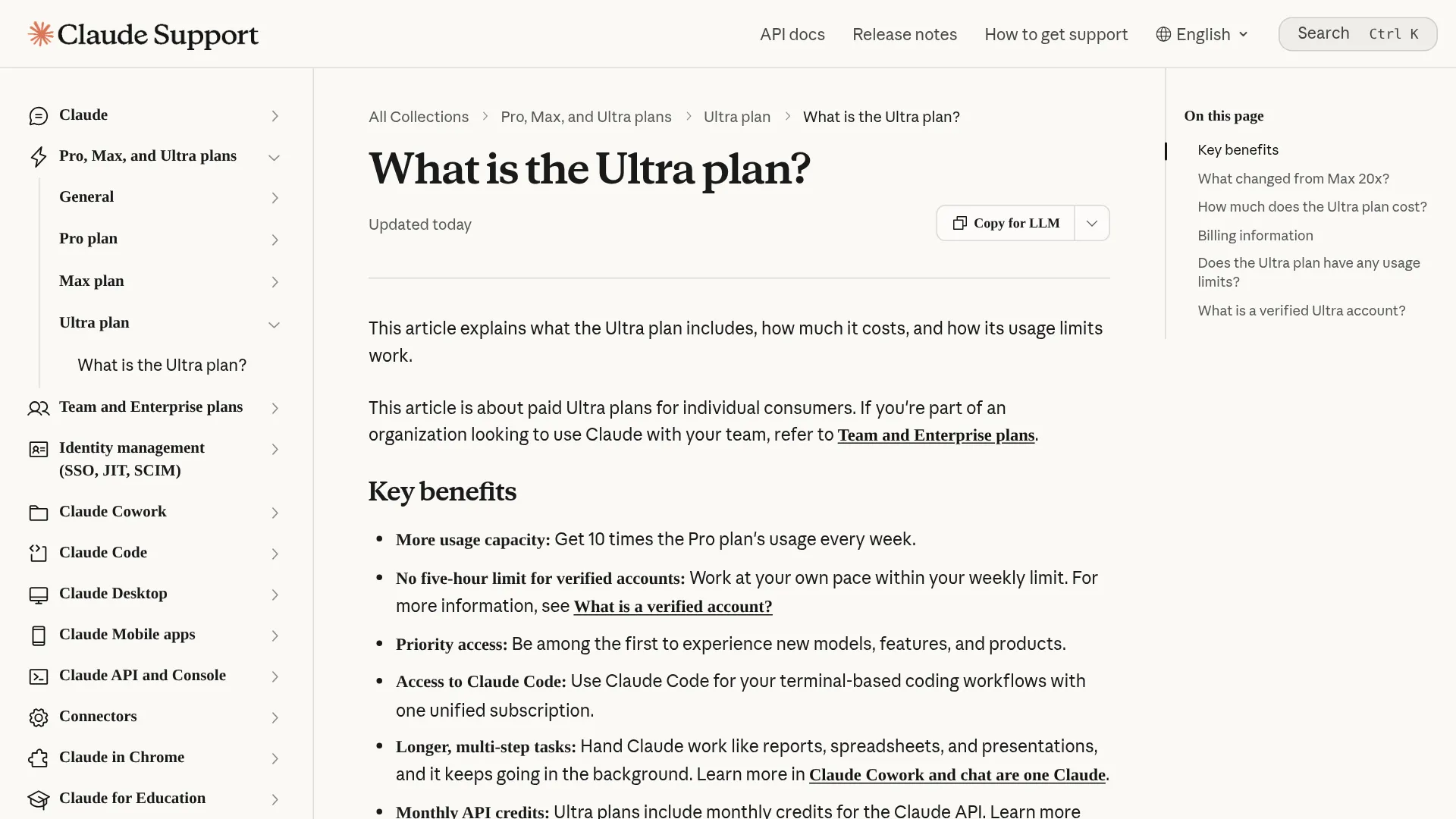
Anthropic renamed its top Claude subscriptions on October 30, 2026, and removed the most annoying cap for one tier. Claude Max costs $100 per month and keeps the 5-hour session limit, while verified Claude Ultra accounts at $200 per month no longer have that 5-hour limit. Weekly limits still cap total work on both plans.
What actually changed on October 30
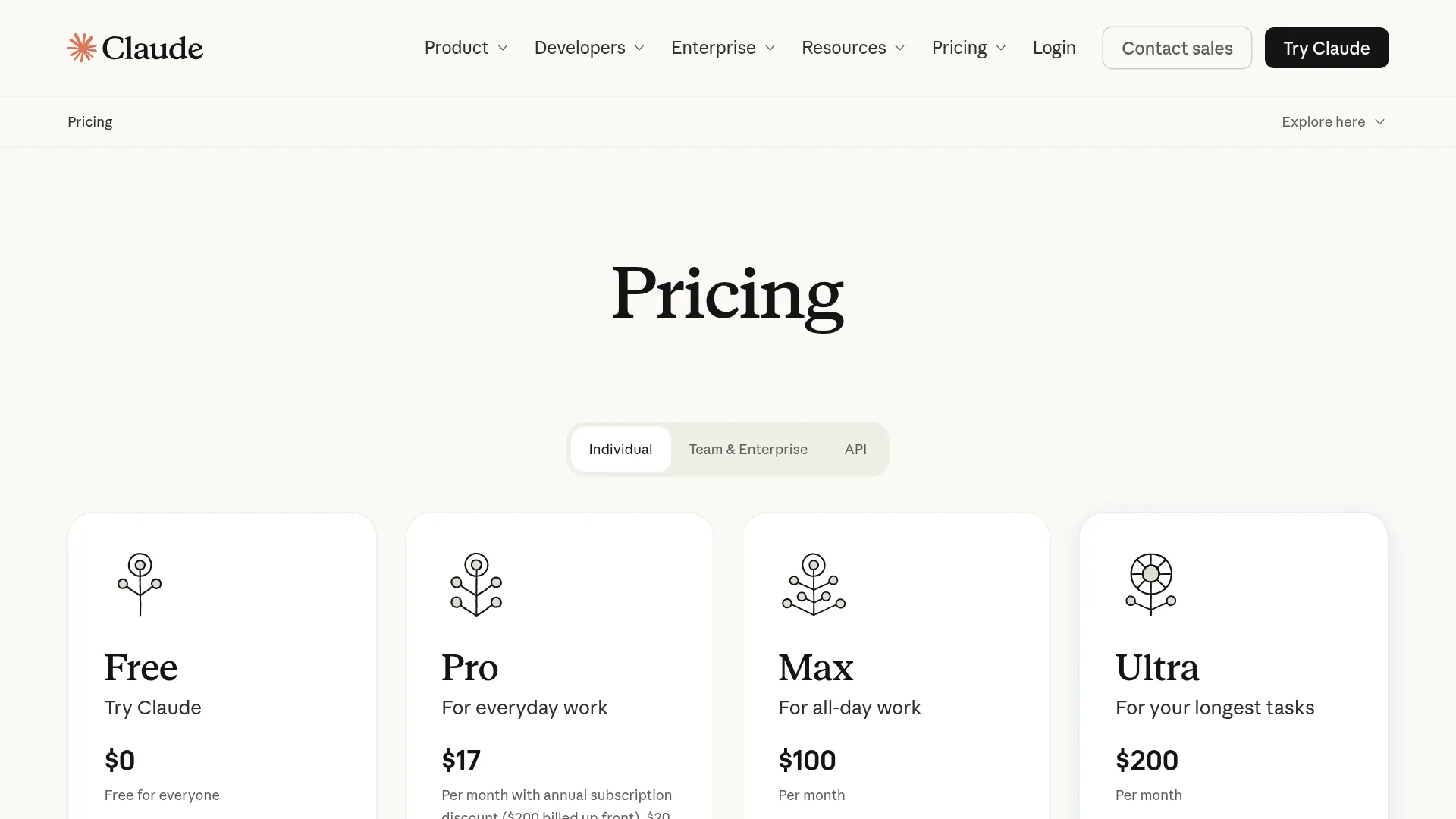
Anthropic renamed Max 5x to Max and Max 20x to Ultra on October 30, 2026. Prices stayed at $100 for Max and $200 for Ultra, existing subscribers moved automatically with no action needed, and weekly allowances stayed unchanged (Ultra help center).
The functional change affects only Ultra. Verified Ultra accounts no longer have the rolling 5-hour session limit that pauses work until the window resets. Anthropic says most existing subscribers had the cap lifted that day, while newer accounts keep a temporary 5-hour limit until automatic verification completes (ArtificialWatch wire recap of the Oct 30 announcement). Anthropic describes the temporary hold as fraud and abuse prevention, and says affected users get an email when the cap is removed (Ultra help center).
Is your Ultra actually verified? How to check in 30 seconds
Ultra verification decides whether the headline benefit applies to a specific account. Anthropic verifies Ultra accounts automatically using factors such as account history and payment history, with no button or form to request it (Ultra help center). Anthropic publishes no verification timeline.
Phone-number verification at checkout does not remove the temporary limit (Ultra help center). New Ultra accounts can show a 5-hour bar for a while even after phone verification.
To check Ultra verification status, open Claude on the web or desktop app and follow these steps:
- Open Settings.
- Select Usage.
- Look for a bar labeled Current session.
No Current session bar means Anthropic treats the account as verified, and only weekly limits remain (Ultra help center). A visible Current session bar means the temporary 5-hour limit still applies.
Claude Max vs Ultra side by side
Claude Max vs Ultra comes down to two usage windows plus bundled API credits. Claude surfaces share one budget across claude.ai, Claude Code, Claude Desktop, and mobile apps, so heavy terminal work reduces chat allowance and vice versa (How usage limits work). Both plans are monthly-only with no annual option (Ultra help center, ToolColumn breakdown).
| Feature | Claude Max (was Max 5x) | Claude Ultra (was Max 20x) |
|---|---|---|
| Price | $100/month, monthly only | $200/month, monthly only |
| 5-hour session limit | Yes, 5x Pro | None for verified accounts; temporary cap until verified |
| Weekly limit | 5x Pro | 10x Pro |
| Fable 5 / 5.1 | Up to half of weekly limit | Up to half of weekly limit |
| Monthly Claude API credits | $100 | $200 |
| Claude Code + Opus + priority access | Yes | Yes |
| Billing | Monthly only, no annual option | Monthly only, no annual option |
Anthropic lists mobile-app prices as potentially different from web prices (Claude pricing), which shows the $100 and $200 web figures. Team and Enterprise plans are separate team products outside this individual-plan rename (Ultra help center).
Fable gets its own row because it consumes weekly allowance faster than Sonnet or Opus (ToolColumn Max vs Ultra breakdown). Both Max and Ultra cap Fable at half the weekly limit, so Ultra effectively doubles Fable headroom. Heavy Fable users can still exhaust a week early.
Which limit will stop you first?
Different Claude Code workflows hit different ceilings. Long uninterrupted sessions hit the 5-hour cap, while high-volume weeks hit the weekly cap regardless of session rules.
Blocked every afternoon by the 5-hour reset, weekly bar still healthy. Long Claude Code refactors, deadline afternoons, and parallel terminals drain a 5-hour window fast. Verified Ultra removes that pause. If the interruption happens only a few times per month, usage credits on Max can bridge the gap for less than $100.
Blocked by Thursday with days left before weekly reset. Ultra doubles weekly headroom from 5x to 10x Pro, but removal of the 5-hour window does not create unlimited usage. Two heavy Claude Code days can consume an Ultra week. Track Settings > Usage for two to three weeks before upgrading for this reason alone.
Rarely near either meter. Max capacity goes unused, and Ultra adds nothing except a larger API credit. Stay on Max.
Real-user reports show how uneven weekly burn feels:
"Hit that 5 hour wall mid debug more times than I'd like to admit, so I'll take it even if it's temporary. The weekly cap is still the real ceiling for me though." — u/Interesting_Demand44 on r/singularity
"92% is wild for a Wednesday. something definitely changed, i've been burning through my limits way faster this week too without doing anything different" — u/Reasonable_Skin_6018 on r/ClaudeAI
Both threads drew long conflicting discussions, with some users blaming subagents, long context, and higher effort levels, and others reporting no change. Anthropic describes usage as variable by model, effort, tools, and conversation size rather than a fixed message count (How usage limits work), so personal meter history beats multiplier math.
The $100 math: API credits and usage credits
API credits change the effective price gap only for developers who already pay for eligible API calls. Max includes $100 per month in Claude Platform credits, while Ultra includes $200 per month. Unused credits do not roll over (ToolColumn Max vs Ultra breakdown).
| Monthly API spend | Cost on Max ($100 + overage) | Cost on Ultra ($200 + overage) | Effective Ultra premium |
|---|---|---|---|
| $0–$100 | $100 | $200 | $100 |
| $150 | $150 | $200 | $50 |
| $200+ | $200+ | $200+ | $0 on subscription, weekly allowance decides |
Included API credits cover Claude API usage, Agent SDK work, and claude -p runs with a linked Console organization key. They do not pay for interactive Claude Code or extra subscription usage (Use Claude Code with your plan). Usage credits are a separate switch: after plan limits run out, paid plans can continue at standard API rates instead of waiting (Use Claude Code with your plan, Manage usage credits).
A rough token example shows when bridging beats upgrading. At illustrative Opus-class rates of $4 per million input tokens and $20 per million output tokens (Explainx Ultra breakdown), a 40,000-input plus 2,000-output Claude Code turn costs about $0.20. About 500 such turns fit inside $100 of credits. Occasional overflow below that level stays cheaper on Max with a capped credit balance. Persistent overflow above it plus regular 5-hour blocks points to Ultra. Fable rates run higher, around $10 input and $50 output per million tokens (Explainx Ultra breakdown), so Fable-heavy overflow crosses the line faster.
How switching bills: proration, annual Pro, and Google Play
- Mid-cycle upgrade: moving from Max to Ultra bills a prorated amount for the rest of the cycle. Claimed API credits prorate immediately, and the full $200 Ultra credit starts with the next cycle (7minAI upgrade guide).
- Annual Pro: unused annual value converts into account credit only when billing addresses match; a changed address requires canceling Pro, waiting for expiry, then resubscribing (Ultra help center).
- Google Play: upgrades charge the full new-plan price immediately and convert unused old-plan value into extra days, pushing the renewal date later (Ultra help center).
What Ultra still doesn't fix
Ultra keeps a weekly limit across all models plus a separate Fable weekly constraint, so no 5-hour limit does not mean unlimited Claude. Anthropic also reserves weekly, monthly, model-specific, and feature-specific caps to manage capacity, and states it does not guarantee uninterrupted service (How usage limits work).
Two practical catches matter more than the rename. First, without session pauses, an intense agent run can burn the whole weekly allowance early in the week. Second, newer Ultra accounts wait in a temporary 5-hour limit with no published clearance time.
Conserve weekly quota the same way on either plan: start fresh chats for new tasks instead of dragging huge history forward, drop unneeded tools and connectors, lower effort for routine edits, and reserve Fable for work that needs it. Details on shared Claude Code billing and the /status meter are in the official Claude Code plan guide.
Claude Max vs Ultra FAQ
Is Ultra the same as the old Max 20x?
Yes, with one policy change. Max 20x became Ultra at the same $200 monthly price and automatic migration (Ultra help center). Verified accounts lost the 5-hour session cap. Anthropic describes weekly limits as unchanged, now labeled 10x Pro.
Do I need to do anything as an existing subscriber?
No. Existing Max 5x subscribers became Max, and Max 20x subscribers became Ultra, with the same price (Ultra help center). Ultra subscribers should check Settings > Usage for the Current session bar and watch for the verification email.
How long does Ultra verification take?
Anthropic publishes no timeline. Verification is automatic based on account and payment history (Ultra help center). Phone verification at checkout does not clear the temporary 5-hour cap.
Do Claude Max and Ultra limits cover Claude Code?
Yes. Claude web, desktop, mobile, and Claude Code share the same plan allowance (Use Claude Code with your plan). Verified Ultra removes the 5-hour pause inside Claude Code but leaves the weekly allowance shared.
Who should pay the extra $100
Buy Claude Max when 5-hour pauses are rare, weekly usage finishes with headroom, and monthly API spend stays under $100. Max plus capped usage credits handles occasional spikes for less than a standing $200 subscription.
Buy Claude Ultra when long Claude Code sessions stall every week, Max weekly allowance runs out most weeks, parallel sessions burn 5-hour windows, or API spend already reaches $200 and the extra $100 credit zeroes out the gap. Track the weekly meter first: Ultra solves session-window pain reliably, weekly-capacity pain only by doubling the ceiling.